
Twinkle, twinkle, David Bowie
10 years have gone by like nanoseconds, and he's still a huge presence.

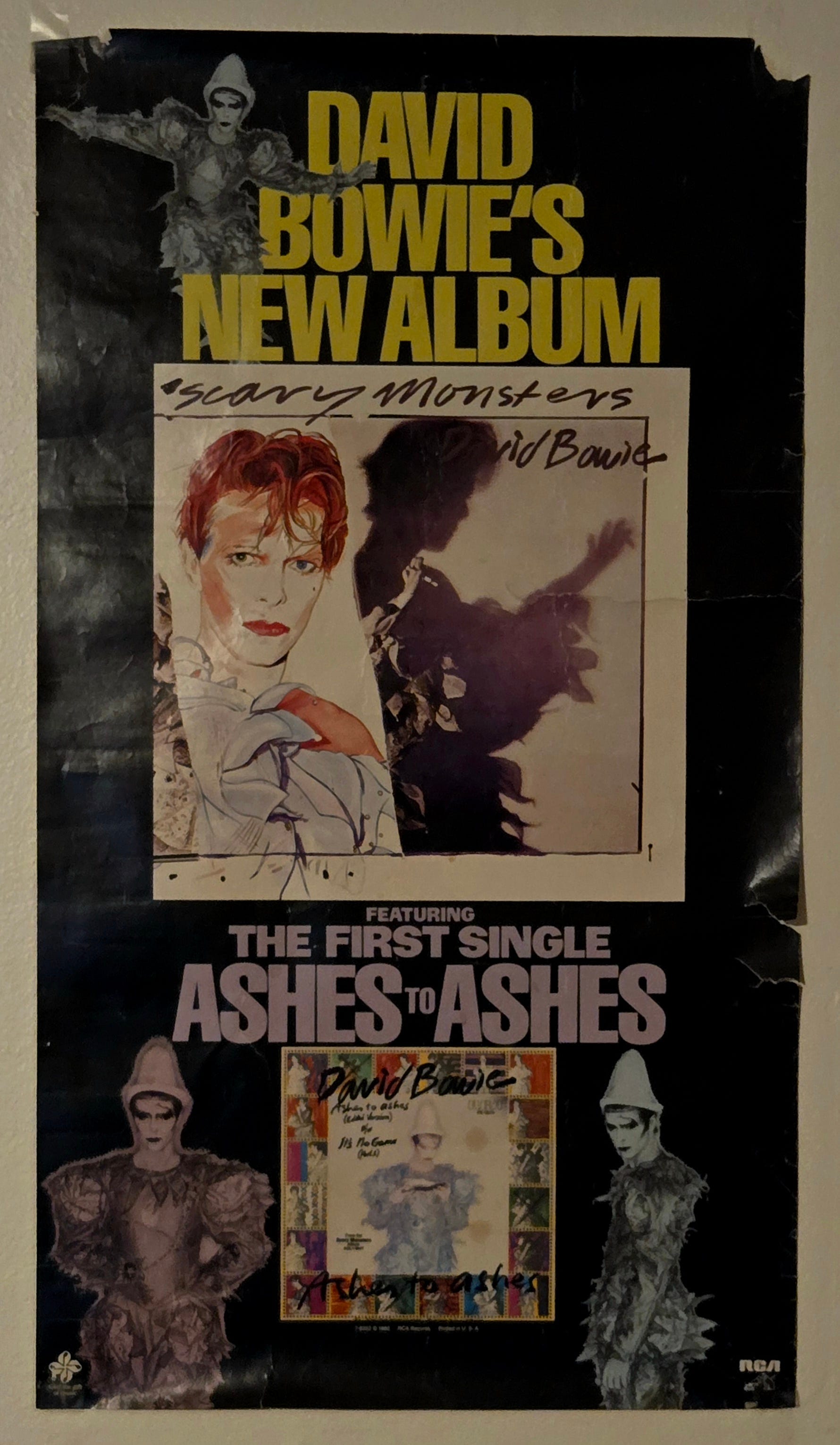
10 years ago this morning, January 10th, 2016. I was in the dining room at my folks’ house, recently unemployed and just screwing around on social media, and about 2 a.m., I was about to shut the laptop when the news started circulating, after son Duncan Jones posted his father’s passing to social media —
Wait — what? He just had his birthday two days ago! He just released his new album! I just played it on my show! What the —
As it turned out, it all went according to plan, and all in the utmost secrecy. Lazarus, the musical, finally made it to the stage. Blackstar, the album, was released. He lived long enough to just make it to 69. Has anyone ever stage-managed their own death (non-suicide edition) better than Bowie, a master of the stage?
As we get older, we tend to say “How did it get to be that long ago already?” a lot more. (Younger generations, you’ll understand this soon enough.) And in this instance, the first huge loss of that goddamned year 2016 for us music fiends seems as if it were mere nanoseconds ago. Especially since he’s still a huge presence among us.
Oogie, Bones Boy and Uncle Floyd
I’m sure many fans, in their tributes today, gravitated first toward “Starman” or “Space Oddity.” Me?
Flash back to 2002. I was sitting at my desk at the New Haven Register, where I doubled as the entertainment editor and music writer, listening to Bowie’s new album, Heathen, on the portable CD player. The album, like many of his later albums, left me kinda cold.
Then, “Slip Away” popped up on the player.
“Oogie waits for just another day …”
Wha? Oogie???
“Drags his bones to see the Yankees play …:”
It can’t be …
“Bones Boy talks and flickers gray …”
WHAT??? I was fully awake then. Uncle Floyd??? What am I listening to?
“Twinkle, twinkle, Uncle Floyd …”
HOLY SHIT!!!
If you live outside of the Tri-State, Uncle Floyd is a New Jersey institution, who was a presence on TV and radio there for over 40 years. The Uncle Floyd Show aired in the ‘70s and ‘80s, initially on a no-budget UHF station in Newark. A friend from Jersey in my dorm at C.W. Post on Long Island turned me on to the show in 1981; we could barely get Channel 68 through the snow on his 12-inch black-and-white screen many afternoons, but we did, and I was hooked.
It was patterned after the kiddie shows that aired on just about every local station in the ‘50s and ‘60s — birthday announcements and postings of viewer-drawn art on what passed for a wall mid-show — and Floyd and his pals, playing a fantastic array of characters, doing some absolutely stoopid, laff-riot skits. And the entendres were so double that eventually, a lot more adults than kids were watching. And for a brief while, with a much better set, they went syndicated. (NBC aired it after Tom Snyder’s Tomorrow, but once they introduced Linda Ellerebee’s news show after Snyder, Floyd was pushed back to 2:30 a.m., so that didn’t work out so well. But for a short while, after I graduated in ‘83, I could see it on Channel 38 in Boston, or, extremely briefly, on Channel 8 in New Haven.
Oogie was Floyd’s wiseass sidekick puppet who opened every show with him; Bones Boy was a skeleton doll who did bad standup, peppered with exclamations of “Heyyyy! Snap it, pal!” Meanwhile, a lot of rock acts started showing up. The Ramones were frequent fliers. Other acts I remember seeing were David Johansen, NRBQ, The Troggs, The Dregs (totally high and goofing around and playing a lot of wrong notes), and Thor, the metal muscleman who bent steel bars in his jaws.
And David was a huge fan of the show. He was turned on to it by John Lennon; he (and Iggy Pop) would head to John’s place to watch Floyd and get their yuks. How big a fan? Now we knew.
Stunned by what I heard, I quickly picked up my gear and headed to the only other Floyd fan in the newsroom, the only one who would understand: Jack Kramer, the paper’s late editor. I rarely stopped by his office, as we were both busy, and he was usually working on one of the many problems an understaffed newsroom presents. But I put the CD player on his desk, gave him the headphones, and I at least got a smile from him. He didn’t smile a lot.
She’s not sure if you’re a boy or a girl … or Bowie and my adolescence
It must be understood that, even though I’m trans (came out in mid-to-late 40s), the androgyny I encountered through rock’n’roll in my teens — David Johansen dolled-up and in pumps; the male-female photo on the back of Lou Reed’s Transformer; Reed’s “Walk on the Wild Side” (good Catholic, uh, boy didn’t know what giving head was back then), Marc Bolan in glitter and Mary Janes; Elton John in a million costumes — didn’t register that heavily back then. At least I don’t think so. Subliminally? Maybe; maybe not. It’s not as if, regardless of what the radical religious right will tell you, such things would turn me, or any other kids, trans. We all know something is different about us at a very early age; with me, I suppressed it until I was 46. (Yesterday, January 9th, was the 18th anniversary of the Feast of My Epiphany.)
And that included Bowie. He was always a changeling — be he Major Tom, floating in his tin can; or the ‘40s screen ingenue of Hunky Dory; or the freaky half-man, half-canine of Diamond Dogs; or Ziggy Stardust.
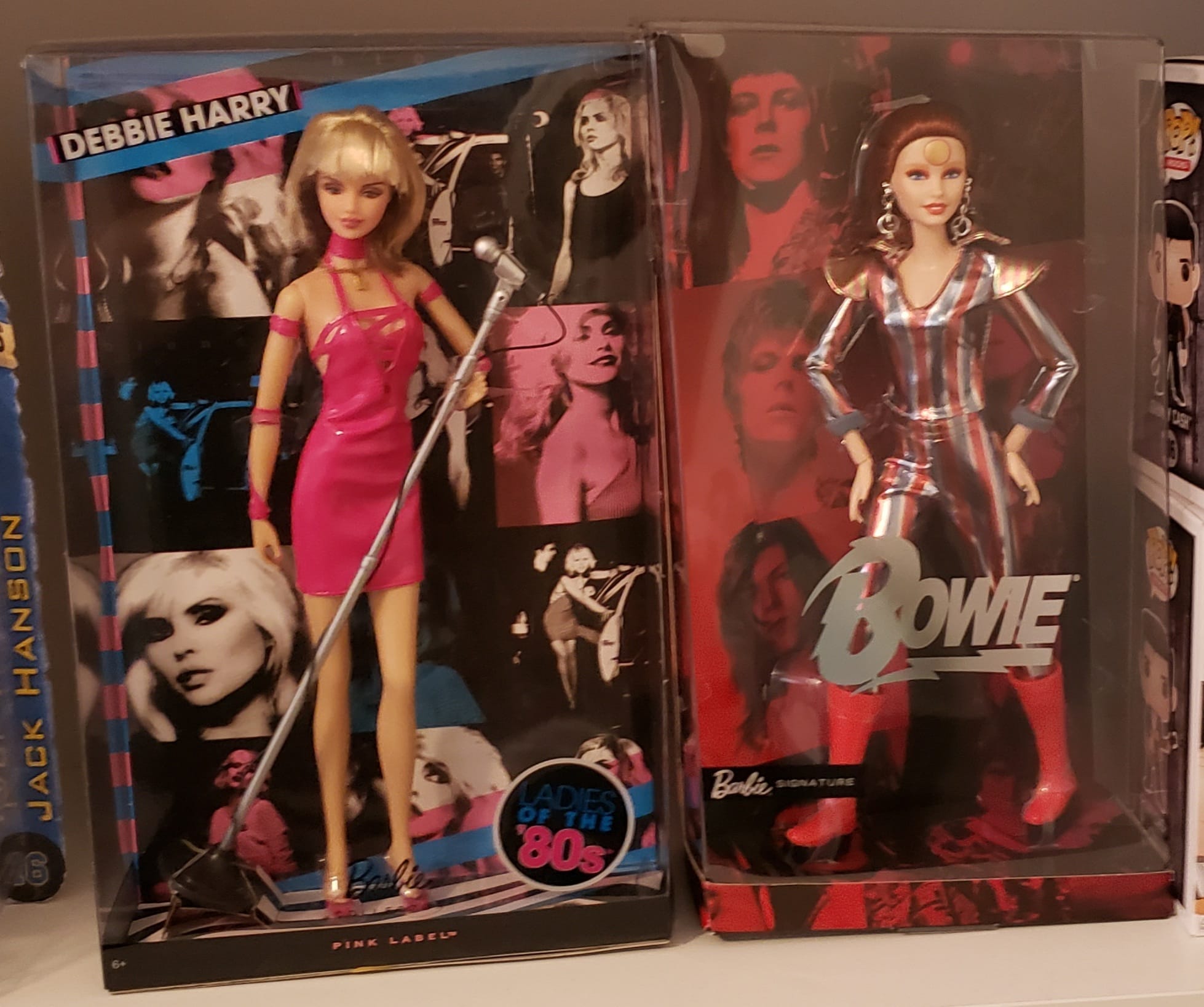
“Rebel Rebel,” one of the ultimate gender-variant anthems, played on both FM and AM radio so often that the lyrics eventually just became another hymn to sing mindlessly, like the ones I heard every week in church or the evergreens (real or fake; I go with the fakes) I hear every Christmas season. The words just seeped into my system to the point where, like the previously mentioned artists and songs, they were just, well, normal.
Besides, by the time I really started paying attention to him, he had killed off Ziggy and was morphing into the Thin White Duke, getting his soul on. Regard him, all coked-out, on “The Dick Cavett Show,” introducing an early version of “Young Americans” to the world in late 1974:
And not long after, about the time I started high school, there was “Fame.” (And shortly after, there was James Brown’s “Hot (I Need to Be Loved Loved Loved),” where, I guess, he felt that because Carlos Alomar was his guitarist before he left for Bowie, he had some right to lift Carlos’s signature guitar lick for a hit of his own. Sampling before hip-hop.
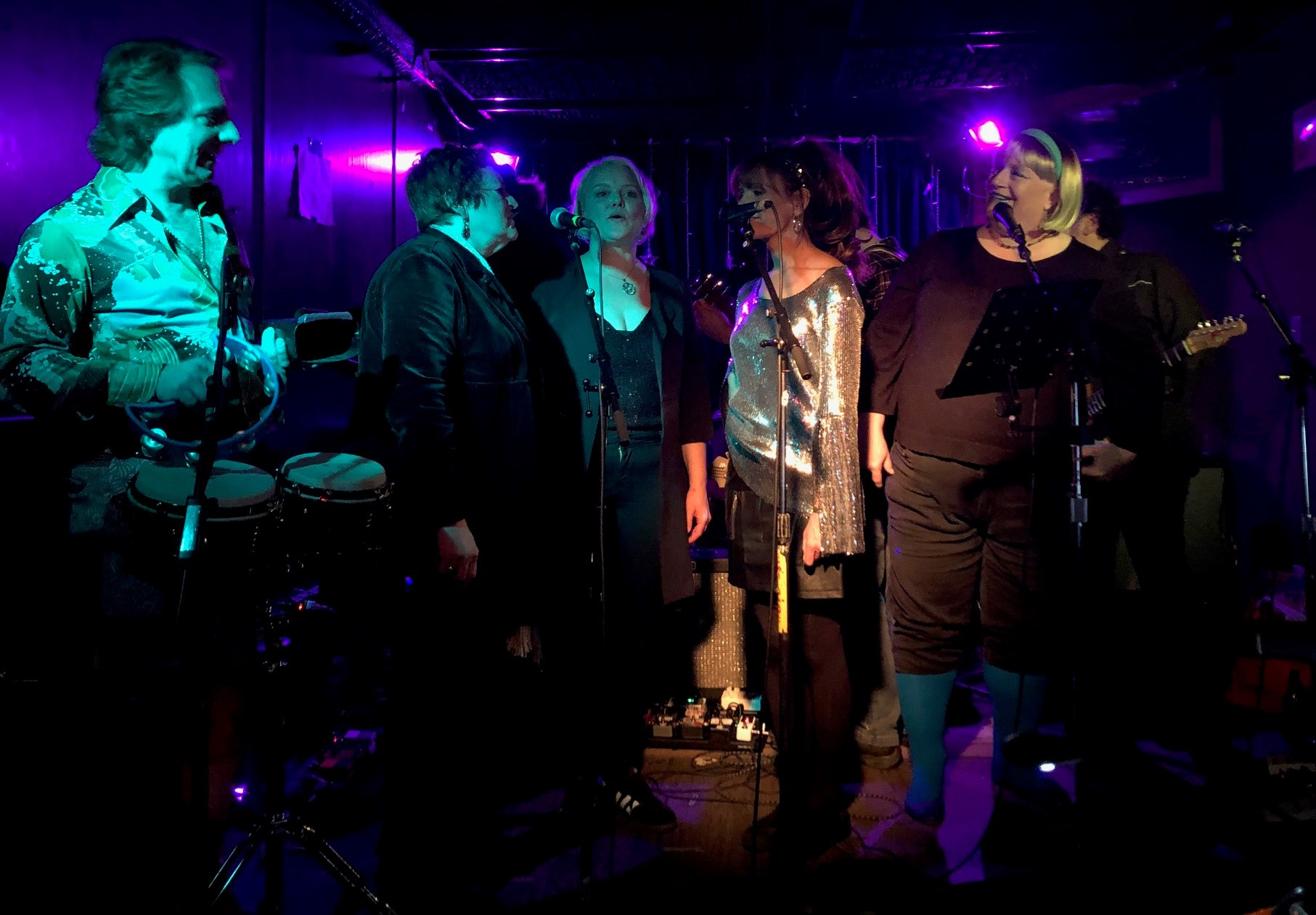
It was a song I would tackle on stage myself many years later. A musician friend, Dean Falcone, hosts a show called the Vomitorium the night before Thanksgiving at Cafe Nine in New Haven; a bunch of friends get together and play covers. In 2019, the theme was ‘70s songs, and I was feeling “Fame” would be a good, easy tune to tackle. Ha-ha. Not quite. There were lots of subtle lyrical gymnastics; I ripped the song to CD and played it over and over in the car for the three weeks ahead of time to get it right. I was white, but sure as hell not thin, not a duke, but I managed to get through it in one piece. I did nail the descending “Fame fame fame …” part, only falsetto for the first two notes, so I was happy about that. And among the black, I wore my share of blue, blue, ‘lectric blue, from my hairband to the teal eye glitter to the blue lipstick and blue glitter lip gloss to my tights.
Which leads into my favorite Bowie song, I won’t pretend I’m a fanatic like several of my friends, but as high school progressed, he was getting clean and working in Berlin with Iggy Pop. And what makes a favorite song a favorite song? Sometimes it’s the lyrics; sometimes it’s something visceral. Here, it was visceral.
And during this extremely fertile period, I saw one of the weirdest, most subversive things I’ve ever seen on TV. April 1977, sophomore year of high school. Dinah Shore had her own afternoon talk show for awhile, and on this particular day, Bowie and Iggy appeared. (While the footage is blurry, I believe the other guest was Rosemary Clooney.) Dinah, a hit singer and TV celebrity who had seen just about everything in her long career, hadn’t seen the likes of Ig before — shirtless, contorting and writhing around the stage. Neither, I guess, did hundreds of thousands of housewives, though Dinah was cool about it, with a great sense of humor. And honestly, neither did I. Too young to see him in the clubs, it was my introduction to Jimmy Osterberg. So I guess he and David eased me into this punk stuff I’d be hearing about in the coming months and years.
And it wouldn’t be the only time we heard of Soupy’s sons, Hunt and Tony Sales, in regards to Bowie.
In the flesh
I actually got to see Bowie twice. Actually, three times, only two performing.
By the time I saw him live, he had gone through some more changes in my college years, more personae — the Pierrot-like clown in the “Ashes to Ashes” video, playing John Merrick in a critically acclaimed, physically demanding turn in The Elephant Man on Broadway.
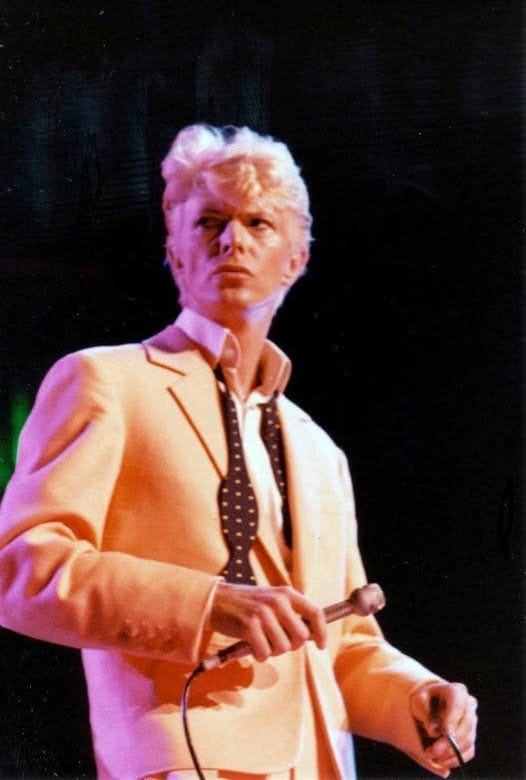
But by graduation in the spring of ‘83, he had moved on to Let’s Dance, both the album and the No. 1 single, where he introduced the world beyond Texas to the phenomenon that was Stevie Ray Vaughan. (Carlos Alomar, though, would return to play on the tour, and Stevie began to soar in his own tragically short career.) And on Bowie’s “Serious Moonlight” tour, he was impeccably dressed, perfectly fitting suit, hair in a styled pompadour popular at the time — looking elegant and beautiful and projecting much energy.
The night of July 16th, he was playing at the Hartford Civic Center. I decided at the last minute to go. I left the parking garage and ran into a guy who had a young woman on each arm. (Really.) He asked me if I needed a ticket for the concert. He had one 10th row for $25 (which, believe it or not, was steep for the time). I waffled for a minute — is this ticket real? — before I said screw it and bought it. And it indeed was legit. At the time, it was the closest I’d ever sat at a concert.
And it sure as hell didn’t disappoint. He was phenomenal. And there was a Connecticut element to the show, too; his backing singers on the tour were George and Frank Simms. The Simms Brothers Band was a staple of the state bar scene for a decade; after this tour, they went on to back a cavalcade of performers, from Elvis Costello to Madonna to Al Green to Cyndi Lauper to Phil Collins to Chic. And at show’s end, hundreds of gold-and-silver mylar crescent moons descended from the ceiling. I took home a piece of Serious Moonlight, which lasted me through several moves before I accidentally popped it during one move.
*******
Fast-forward to November 1991. Before moving on to the Register, I was the entertainment writer at my first paper, in Waterbury. And Tin Machine — Bowie’s band with the Sales brothers and Reeves Gabrels — was going to play at Toad’s Place in New Haven. And their publicist set up a press meeting, the emphasis being that it wasn’t Bowie’s band, but rather, he was just one of the guys.
The group spent the day before, a day off the road, rehearsing at The Sting, a club in a converted bowling alley in New Britain. The publicist had us watch them run through several songs — I wasn’t a fan; sorry, not sorry, though I did go to Toad’s the next night — and then David sat with us to field some questions. And when we were done, he thanked each of us and shook our hands; yes, I met David for about two seconds, and yes, I did wash that hand again.
The owners also had a strip club attached to the music club; probably the alley lounge in its past life. I made my way out through the club, and as I turned the corner, I came face to … well, one of the strippers was doing a flying V on the pole at my eye level, perpendicular to my face and not very far away. Helllll-LO! Needless to say, it was not part of the press event.
Heroes
So yeah, while he wasn’t on my Rushmore of musical performers, I always admired David for charting his own courses, being a mostly highly successful changeling, and approaching his sound and stage personae with precision, on his own terms — right up to the hour of his death.
I’ve been thinking about him much more recently, with the shitstorm the current administration has been whipping up for a year now in the name of trying to establish a fascist state. And the lawless regime — and I write this three days after Renee Good’s murder by an ICE goon in Minneapolis — has spawned thousands, millions of anonymous heroes, who have taken to the streets in numbers never seen before in our history, who have mobilized with whistles at the ready to warn the most vulnerable among us, who have even put themselves in harm’s way to keep ICE from kidnapping innocent people.
Which also led me to thinking about “Heroes.”
It also led me to think of old friend Larry Kirwan — playwright, author and, for 25 years, the leader of Black 47. Last year, he recorded a version of the song, “Heroes/Belfast.” Larry (who has many more, and much richer, stories than I) has talked, to both the audiences and media, about how he came to recording his version of the song based on a conversation he had with Bowie at a bar in New York one night.
As Larry recalled, Bowie had come down to the bar to see a band which, as it turned out, had cancelled, so he asked him if he could sit with him and his friends. (As if anyone in their right mind would say no …) They got to talking about “Heroes,” and David told him, “You know what, I was just thinking that I could have written that song about Belfast as easily as I wrote it about Berlin, because they’re two cities with walls between them.’” And a generation or so later, here we are.
Here in the States, the walls between us these days are ones of ignorance, of misinformation, of bigotry, of unfounded hatred. And just as no one sets out to be a martyr — Renee left the house that morning simply to drop her kid off at school — no one says “I’m gonna be a hero today.” But fate does tap some of us to be heroes, if just for one day.
So yes, in a way, Bowie is still here, even a decade later.
Fran Fried, who’s gone through some ch-ch-ch-changes herself, is a recovering journalist who’s had several career personae — music writer, entertainment editor, features editor and writer, sportswriter and editor, copy editor, freelance publicist, documentary talking head and narrator, and communications writer for a major university. And oh yeah, also an infamous Jeopardy! contestant. She’s currently on hiatus from her Cygnus Radio show, Franorama 2.0, so she can finally finish her damned book. She lives in Somewherein, Connecticut.
I suspect that I am a bigger Bowie fan than you, Fran, but that's not saying much. I own maybe a half dozen of his albums, and at least one is a compilation. I most passionately love the Ziggy Stardust period and then the Berlin Trilogy.
The epilogue to the Berlin Trilogy, "Scary Monsters," was the album that made me a fan. I heard similarities to much New Wave I was consuming in 1980, especially the Post-Punk, Synth-Pop, and Dark Wave varieties. The album also ended my childish fear and loathing of Bowie, brought on by a misguided and homophobic lecture my mother gave me when I was eight or nine. My mom loved me and was trying to be protective, but she filled me with the same kind of "groomer" nonsense we hear from MAGA today. Thankfully, I learned about the birds and the bees in time to refute all that misinformation.
Bowie's death hit me almost as hard as John Lennon's. Yes, both gentlemen were past their prime, but I found their presence reassuring. It does seem that the world started going to shit after Lennon's murder and accelerated after Bowie's passing.